
📌 Key Takeaways
- Humans have 8 incisors in total
- They are located at the front of the mouth
- Used for cutting and biting food
- Important for speech and appearance
- Present in both children and adults
When you smile, the first teeth people notice are your incisors. These front teeth shape your smile, help you bite into food, and even affect how you speak.
But here’s a simple question many people don’t know the answer to:
How many incisors do humans actually have?
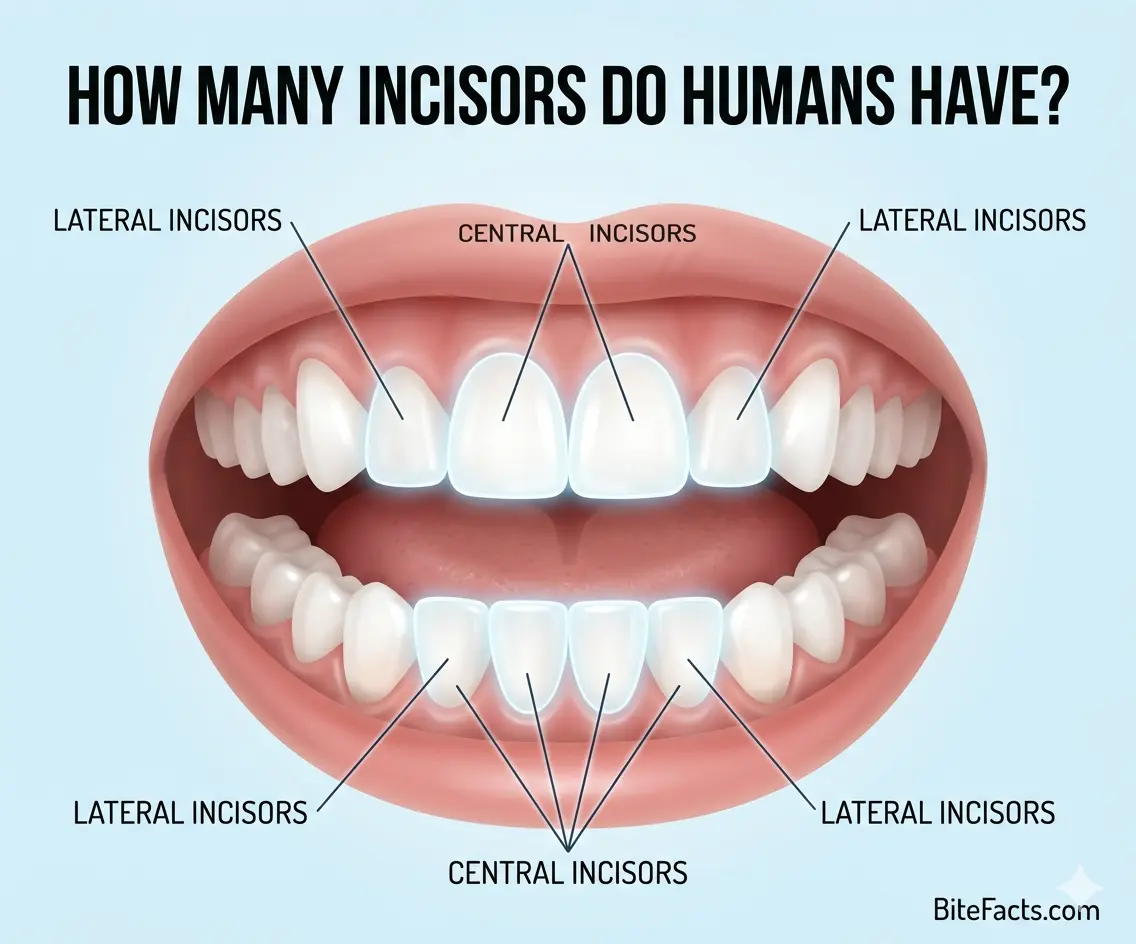
Humans have 8 incisors in total.
- 4 incisors in the upper jaw
- 4 incisors in the lower jaw
Each jaw includes:
- 2 central incisors
- 2 lateral incisors
🦷 Quick Answer
Humans have 8 incisors—4 on the top and 4 on the bottom. These front teeth are used for cutting and biting food.
What Are Incisors?
Incisors are the thin, sharp-edged teeth at the front of your mouth. Their main job is simple:
Cutting food into smaller pieces
Think of them as your mouth’s natural scissors.
They also play a role in:
- Speech clarity
- Facial appearance
- Supporting lip structure
Types of Incisors
There are two types of incisors in each jaw:
1. Central Incisors
- Located at the very front
- First to erupt
- Most visible when you smile
2. Lateral Incisors
- Positioned next to central incisors
- Slightly smaller
- Help guide bite alignment
| Type | Location | Function |
|---|---|---|
| Central Incisors | Front center | Cutting food, aesthetics |
| Lateral Incisors | Next to central incisors | Support cutting and alignment |
How Many Incisors Do Children Have?
Children also have 8 incisors as part of their 20 baby teeth.
Timeline:
- First incisors appear around 6–10 months of age
- These are usually the lower central incisors
When Do Adult Incisors Replace Baby Teeth?
- Baby incisors start falling out around age 6
- Permanent incisors usually fully develop by age 8–9
This is one of the earliest stages in dental development.
🕒 Incisor Development Timeline
- 6–10 months: Baby incisors appear
- Age 6: Baby incisors start falling out
- Age 8–9: Permanent incisors fully erupt
Why Incisors Are So Important
Incisors may look simple, but they do critical work:
1. Cutting Food
They make the first bite possible.
2. Speech Clarity
Sounds like “th” and “f” depend on proper incisor alignment.
3. Smile & Confidence
They are the most visible teeth when you talk or smile.
Common Problems With Incisors
1. Chipping or Cracks
Front teeth are more exposed to injury.
2. Misalignment
Crowding or spacing issues can affect bite and appearance.
3. Tooth Decay
Poor oral hygiene can damage enamel over time.
According to the CDC, tooth decay remains one of the most common health conditions globally.
How to Take Care of Your Incisors
- Brush gently to avoid enamel wear
- Avoid biting hard objects (ice, pens)
- Floss daily
- Visit your dentist regularly
To build topical authority, connect this article with your main pillar content:
Related Guide: How Many Incisors Do Humans Have
Incisors vs Other Teeth
Final Thoughts
Incisors might seem small, but they do big work. They help you take the first bite, shape your speech, and define your smile.
Without them, even simple tasks like eating an apple would feel difficult.
Take care of your incisors—they’re more important than they look.
Sources
- American Dental Association (ADA)
- Centers for Disease Control and Prevention (CDC)
- National Institute of Dental and Craniofacial Research (NIDCR)
