
If you’ve ever chewed a tough piece of meat or crushed nuts without thinking twice, you can thank your molars. These back teeth do the heavy lifting in your mouth—but surprisingly, many people don’t actually know how many molars they have.
Let’s clear that up in a simple, accurate, and practical way.
🦷 Quick Answer
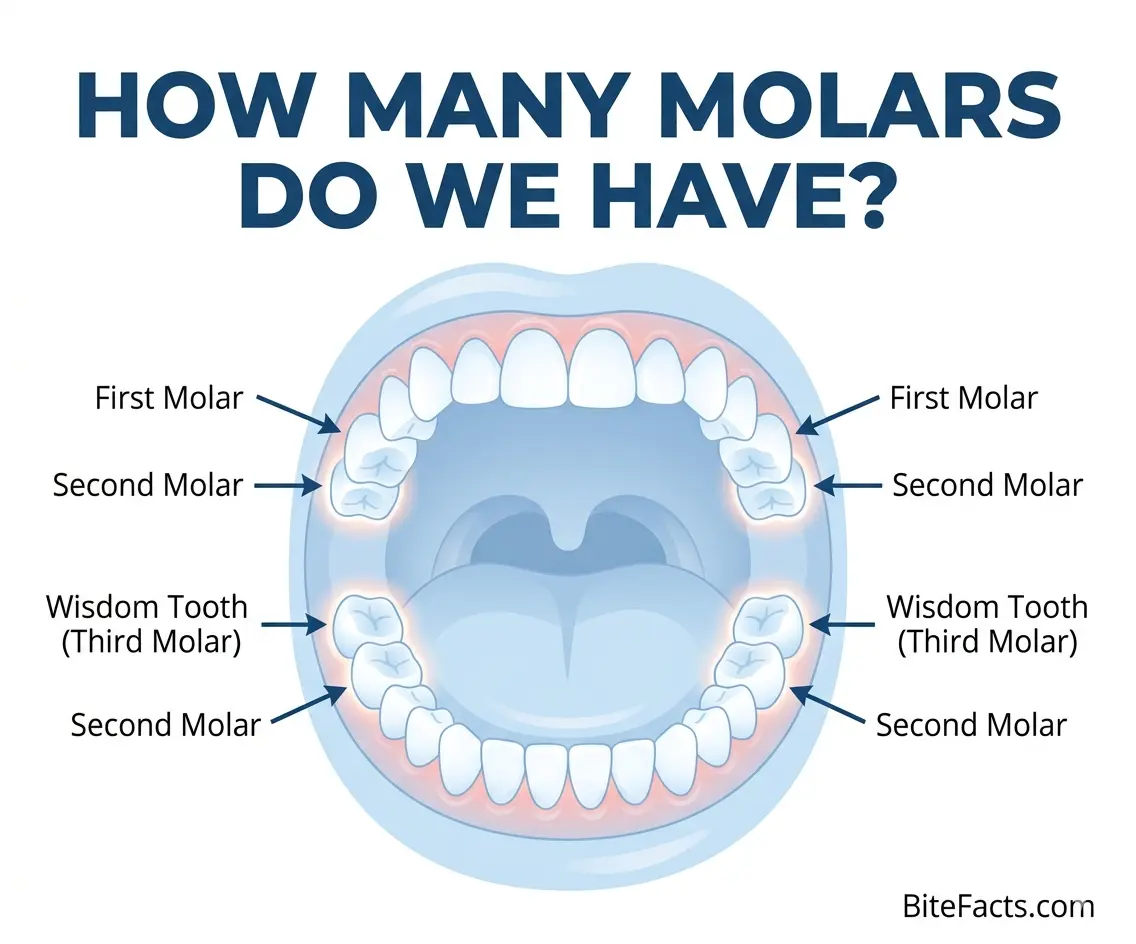
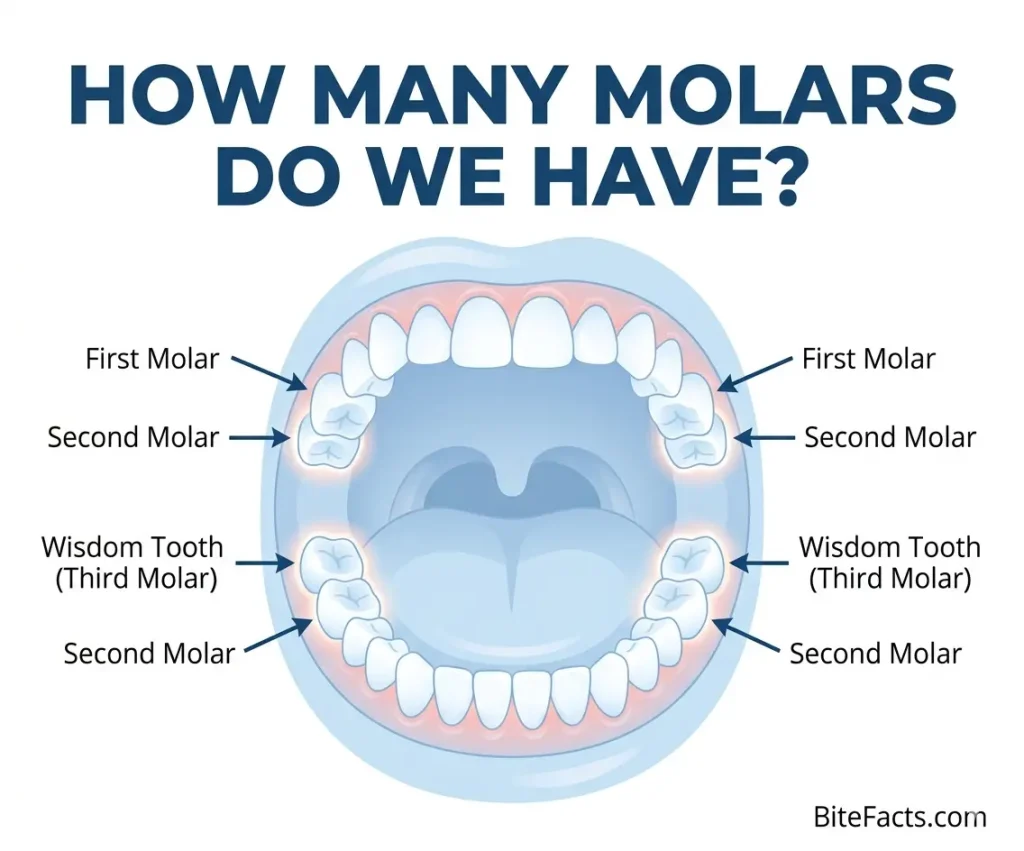
Adults typically have 12 molars, with 3 on each side of the upper and lower jaws. These include first molars, second molars, and third molars (wisdom teeth).
📌 Key Takeaways
- Adults usually have 12 molars
- Children have 8 molars
- Wisdom teeth may not develop or may be removed
- Molars are essential for chewing and digestion
- Proper care helps prevent cavities and gum disease
What Exactly Are Molars?
Molars are the large, flat teeth located at the back of your mouth. Their design is built for efficiency.
They have:
- Broad chewing surfaces
- Multiple roots for strength
- Strong enamel to handle pressure
Unlike incisors or canines, molars grind and crush food into smaller pieces before swallowing.
How Many Molars Teeth Do Humans Have?
An average adult has 12 molars.
These include:
- 6 molars in the upper jaw
- 6 molars in the lower jaw
Each side of your mouth contains:
- 3 molars (first, second, and third molars)
Types of Molars
| Molar Type | Eruption Age | Function |
|---|---|---|
| First Molars | Around 6 years | Primary chewing and grinding |
| Second Molars | Around 12 years | Support chewing and alignment |
| Third Molars (Wisdom Teeth) | 17–25 years | Optional, often removed |
1. First Molars
- Erupt around age 6
- Known as “6-year molars”
- Strongest teeth for chewing
2. Second Molars
- Appear around age 12
- Support chewing and alignment
3. Third Molars (Wisdom Teeth)
- Emerge between 17–25 years
- May be removed due to lack of space
Do Everyone Have 12 Molars?
Not always.
While 12 molars is the standard, many adults have fewer.
You may have fewer molars if:
- Your wisdom teeth never develop
- You had them removed
- They remain impacted
Research from the American Dental Association (ADA) confirms that many adults don’t retain all wisdom teeth due to space issues.
How Many Molars Do Children Have?
Children have 8 molars as part of their 20 baby teeth.
They have:
- 2 molars per quadrant
These help them chew until permanent teeth replace them.
When Do Molars Come In?
In Children:
- First molars: Around 6 years
- Second molars: Around 12 years
In Adults:
- Wisdom teeth: 17–25 years
🕒 Molar Development Timeline
- Age 6: First molars appear
- Age 12: Second molars erupt
- Age 17–25: Wisdom teeth may emerge
Why Molars Matter More Than You Think
Molars do more than just chew food.
1. Better Digestion
They break food into smaller pieces before swallowing.
2. Jaw Alignment
They support your bite and keep teeth aligned.
3. Facial Structure
They help maintain the natural shape of your face.
Common Problems With Molars
1. Tooth Decay
Molars have grooves where food gets trapped easily.
According to the CDC, tooth decay is one of the most common health conditions worldwide.
2. Impacted Wisdom Teeth
These can cause:
- Pain
- Swelling
- Infection
3. Gum Disease
Back teeth are harder to clean, increasing risk.
How to Take Care of Your Molars
Daily Habits:
- Brush twice daily
- Use fluoride toothpaste
- Floss regularly
Smart Tips:
- Use an electric toothbrush
- Clean back teeth carefully
Professional Care:
- Visit your dentist every 6 months
Molars vs Other Teeth
| Tooth Type | Function | Number |
|---|---|---|
| Incisors | Cutting | 8 |
| Canines | Tearing | 4 |
| Premolars | Crushing | 8 |
| Molars | Grinding | 12 |
Fun Fact
Your molars can handle up to 70 pounds of pressure while chewing.
Final Thoughts
Molars may not be visible when you smile, but they do the hardest work every day. From childhood to adulthood, they help you chew, digest, and maintain oral health.
Take care of them, and they will serve you for life.
Sources
- American Dental Association (ADA)
- Centers for Disease Control and Prevention (CDC)
- National Institute of Dental and Craniofacial Research (NIDCR)