

📌 Key Takeaways
- Humans have 4 canine teeth
- Located between incisors and premolars
- Used for tearing and gripping food
- Important for bite alignment and facial structure
- Present in both children and adults
When you think about “fangs,” you’re actually thinking about your canine teeth. These sharp, pointed teeth sit between your incisors and premolars—and they play a bigger role than most people realize.
But here’s the simple question:
How many canines do humans have?
Let’s break it down clearly, using real dental facts and practical insights.
How Many Canines Do Humans Have?
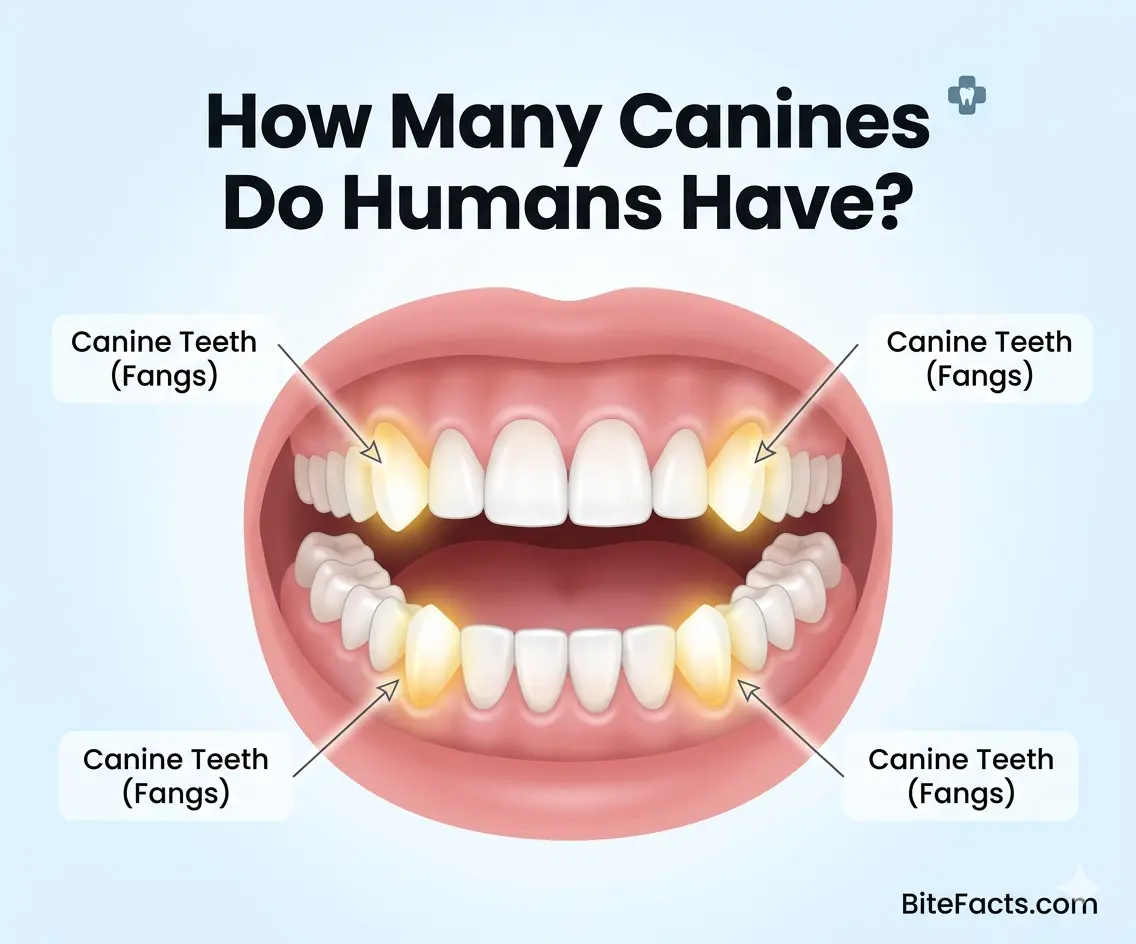
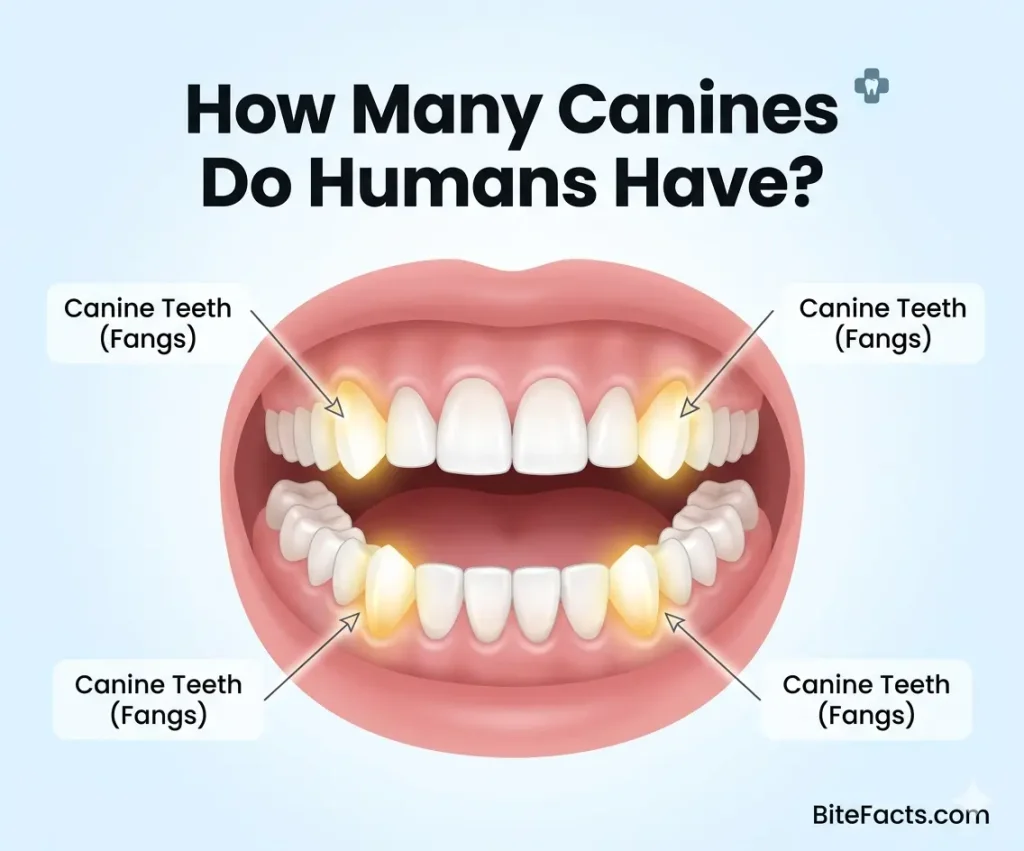
Humans have 4 canine teeth—2 in the upper jaw and 2 in the lower jaw. These pointed teeth are used for tearing and gripping food.
- 2 canines in the upper jaw
- 2 canines in the lower jaw
Each side of your mouth has one canine, placed between the incisors and premolars.
What Are Canine Teeth?
Canines are the sharp, pointed teeth located next to your incisors (front teeth). Many people call them “fangs” because of their shape.
Their main job is:
Tearing and gripping food
They are built for strength, with:
- A single long root (one of the longest in the mouth)
- A pointed crown for piercing food
- Strong structure for durability
Where Are Canines Located?
Canines sit between:
- Incisors (front teeth)
- Premolars (behind canines)
In each quadrant (section of your mouth), you have:
- 1 canine tooth
So:
- Upper left → 1
- Upper right → 1
- Lower left → 1
- Lower right → 1
Total = 4 canines
| Feature | Details |
|---|---|
| Total Number | 4 canines |
| Upper Jaw | 2 canines |
| Lower Jaw | 2 canines |
| Function | Tearing and gripping food |
How Many Canines Do Children Have?
Children also have 4 canines as part of their 20 primary (baby) teeth.
Timeline:
- Baby canines erupt around 16–20 months
- They are replaced by permanent canines between 9–12 years
When Do Permanent Canines Come In?
Permanent canines usually appear:
- Lower canines: around 9–10 years
- Upper canines: around 11–12 years
Upper canines often erupt later and may sometimes get stuck (impacted) if there isn’t enough space.
Canine Teeth Development Timeline
- 16–20 months: Baby canines appear
- Age 9–10: Lower permanent canines erupt
- Age 11–12: Upper permanent canines erupt
Why Canines Are Important
Canines do more than just tear food.
1. Strong Bite Support
They help guide your bite and protect other teeth during chewing.
2. Facial Structure
Canines support your lips and facial shape.
3. Alignment & Stability
Dentists often call them the “cornerstones of the dental arch” because they help keep your teeth aligned.
Common Problems With Canines
1. Impacted Canines
Especially common in upper canines when they don’t erupt properly.
2. Misalignment
Canines may grow out of position if there isn’t enough space.
3. Wear and Damage
Though strong, they can still wear down over time.
According to the American Dental Association (ADA), proper alignment and early dental care can prevent many of these issues.
How to Take Care of Your Canines
- Brush twice daily with fluoride toothpaste
- Floss to clean around tight spaces
- Avoid using teeth to open packages
- Visit your dentist regularly
Want to understand the full structure of human teeth? Read our guide on how many teeth humans have.
Canines vs Other Teeth
| Tooth Type | Function | Number |
|---|---|---|
| Incisors | Cutting | 8 |
| Canines | Tearing | 4 |
| Premolars | Crushing | 8 |
| Molars | Grinding | 12 |
Also explore:
How Many Molars Do We Have?
How Many Incisors Do Humans Have?
Final Thoughts
Canine teeth may look simple, but they play a powerful role in your oral health. From tearing food to maintaining your bite, they act as the anchors of your smile.
Without them, chewing and alignment would become much harder.
Take care of your canines—they quietly do essential work every day.
