
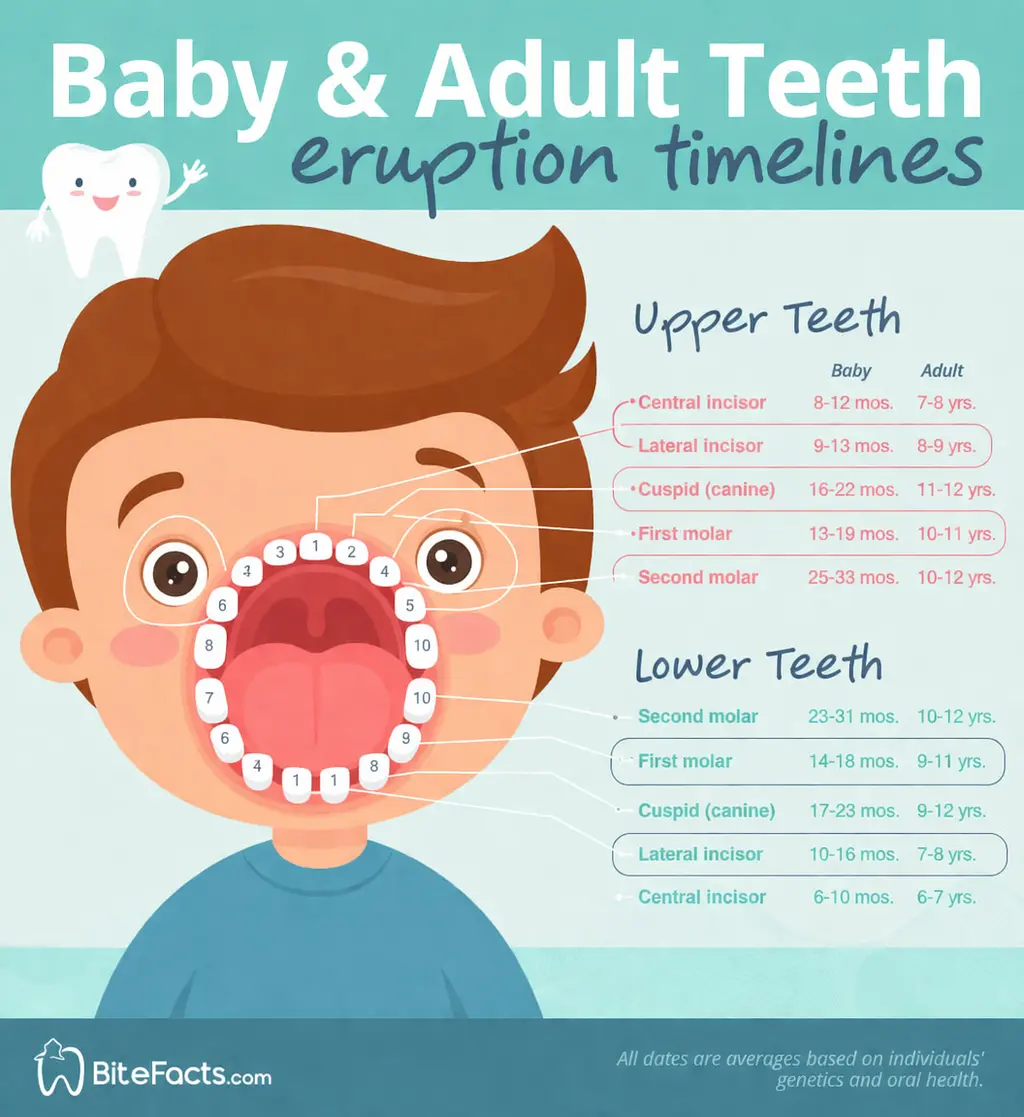
Quick Answer: Children lose all 20 baby teeth over time, usually between the ages of 6 and 12 years old. Making room for permanent human teeth to come in.
Watching your child lose their baby teeth is one of those magical, sometimes hilarious milestones of childhood. That first wobbly tooth can bring excitement, worry, and questions about whether your child is “on track.” Understanding the timeline, stages, and care for baby teeth can help you guide your child safely through this transition.
Key Takeaways
- Children have 20 baby teeth which are eventually replaced by 32 adult teeth.
- Baby teeth usually start falling out around age 6 and continue until 12–13 years.
- The first wobbly teeth are typically the lower and upper central incisors.
- The mixed dentition phase occurs between ages 6–12 when children have both baby and adult teeth.
- Permanent first molars (“6-year molars”) may erupt behind baby teeth, sometimes causing a “shark teeth” appearance.
- Regular dental checkups are essential to monitor tooth development and prevent spacing or alignment issues.
Key Facts
- Kids lose all 20 baby teeth — not just a few!
- The process can take 6–7 years to complete
- Some children lose teeth earlier or later — both are normal
- The tooth fairy tradition makes losing teeth exciting for kids
- Baby teeth help guide adult teeth into the correct position
How Many Baby Teeth Do Children Have?
Children are born with all 20 primary (baby) teeth in their jaws, but these hidden treasures only start appearing around 6 months of age. By roughly age 3, most children have a full set of baby teeth.
These teeth are evenly distributed:
- 10 teeth in the upper jaw
- 10 teeth in the lower jaw
Breakdown of Baby Teeth:
- 8 Incisors (front teeth for cutting)
- 4 Canines (pointed teeth for tearing)
- 8 Molars (back teeth for grinding)
These teeth aren’t just for show — they’re essential for:
- Eating properly — chewing skills develop alongside the teeth.
- Speech development — teeth help children form sounds like “t,” “d,” and “s.”
- Maintaining space for adult teeth — they guide permanent teeth into their correct positions.
- Facial structure — teeth support the cheeks and lips for a balanced appearance.
How Many Baby Teeth Do Kids Lose?
Children eventually lose all 20 baby teeth as their adult teeth come in. Most people grow 32 adult teeth, including wisdom teeth, which usually appear later in adolescence.
This natural replacement process ensures children can chew adult foods and maintain a healthy smile.
Order of Baby Teeth Loss
Teeth usually fall out in the same order they appeared.
Common Order:
- Central incisors (front teeth) → ages 6–7
- Lateral incisors → ages 7–8
- First molars → ages 9–11
- Canines → ages 9–12
- Second molars → ages 10–12
However, every child is different — slight variations are completely normal.
| Tooth Type | Number of Teeth | Typical Age Lost |
|---|---|---|
| Incisors | 8 | 6–8 years |
| Canines | 4 | 9–12 years |
| Molars | 8 | 10–12 years |
Why Do Children Lose Their Baby Teeth?
Humans are diphyodont, meaning we develop two sets of teeth in a lifetime. Baby teeth are perfectly sized for small mouths. As a child’s jaw grows, permanent teeth emerge and push out the baby teeth by dissolving their roots. This ensures the new teeth have the space they need to grow properly.
So, baby teeth fall out due to a natural biological process.
Baby Teeth vs Adult Teeth
Baby teeth, also called primary teeth, are smaller, fewer in number, and specially designed for a child’s developing jaw.
In contrast, adult teeth are larger, stronger, and permanent, totaling 32 teeth including wisdom teeth, compared to the 20 baby teeth.
While baby teeth help with chewing, speech development, and jaw alignment, adult teeth take over these functions for a lifetime.
| Feature | Baby Teeth | Adult Teeth |
|---|---|---|
| Number of Teeth | 20 | 32 (including wisdom teeth) |
| Size | Smaller | Larger |
| Function | Chewing soft foods, speech development, jaw alignment | Chewing adult foods, permanent oral function |
| Longevity | Temporary | Permanent |
| Root Structure | Roots dissolve as permanent teeth emerge | Fully developed roots; permanent |
| Age Rang | 0-12 years | 12+ years |
Timeline: When Do Kids Lose Baby Teeth?
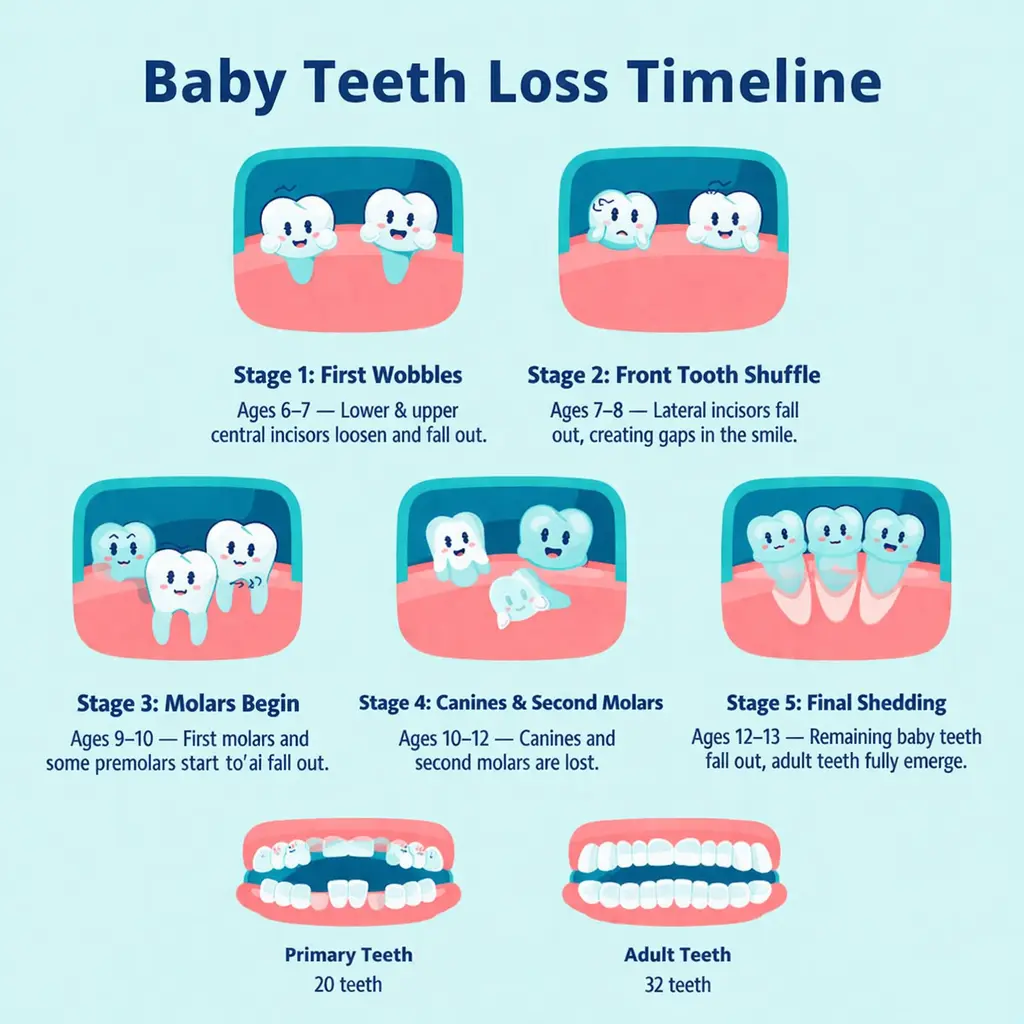
Children usually start losing teeth around age 6, though some begin as early as 4 or as late as 8. Most kids finish the process by age 12–13. This period, when children have a mix of baby and adult teeth, is called the mixed dentition phase.
Stages of Baby Teeth Loss
| Age Range | Teeth Falling Out | Stage |
|---|---|---|
| 6–7 years | Lower & upper central incisors | Stage 1: First wobbles; front teeth are usually first to go. |
| 7–8 years | Lateral incisors | Stage 2: Front tooth shuffle; gaps appear in the smile. |
| 6 years (permanent molars) | First permanent molars erupt behind baby teeth | Mixed dentition begins; sometimes mistaken for extra teeth. |
| 9–10 years | First premolars & some molars | Stage 3: Molars begin to fall out. |
| 10–12 years | Canines & second molars | Stage 4: Final shedding; most baby teeth are gone. |
| 12–13 years | Remaining baby teeth | Mixed dentition ends; only permanent teeth remain (excluding wisdom teeth). |
Important: The 6-Year Molars
One interesting twist is the first permanent molars, also called “6-year molars,” which erupt behind the baby teeth around age 6. Parents sometimes mistake these for extra baby teeth, but they are permanent. This stage is a hallmark of the mixed dentition phase.
Signs a Baby Tooth is Ready to Fall Out
Before a tooth falls, you may notice:
- Wiggling movement
- Tooth shifts when touched
- Mild discomfort while eating
- Small gaps appearing as the permanent tooth pushes from below
Most children feel minimal pain, but intense discomfort or swelling should prompt a dental visit.
Common Questions Parents Ask
What Should Parents Expect?
Expect mixed emotions — some kids are thrilled, others may be nervous. Make it fun:
- Read books about losing teeth
- Celebrate milestones
- Introduce the “Tooth Fairy” tradition
What If Teeth Fall Out Too Early or Too Late?
- Too early: Could lead to spacing issues; consult a dentist if teeth fall before age 4.
- Too late: Most children still fall within normal ranges, but X-rays can help monitor development.
What If Baby Teeth Won’t Fall Out?
Permanent teeth sometimes erupt before the baby tooth falls, causing a “shark teeth” look. Usually, this resolves naturally, but a dentist may remove the stubborn baby tooth if necessary.
Tips for a Positive Experience
- Encourage gentle wiggling with clean hands
- Keep up with brushing and flossing
- Offer soft foods if the child experiences mild discomfort
- Celebrate each milestone to make the experience fun
Routine dental checkups from age 1 onward are essential to prevent early decay and monitor tooth development.
When to See a Dentist
- Tooth falls out very early or late
- Permanent teeth erupt but baby teeth remain
- Severe pain, swelling, or bleeding
- Difficulty eating or brushing
Early consultation ensures proper dental alignment and healthy growth.
Final Thoughts
Children lose all 20 baby teeth as part of a natural and important developmental process. While the general timeline is between ages 6 and 12, every child’s experience is slightly different.
Losing baby teeth is a natural and exciting part of growing up. Every child’s timeline is unique, and variations are usually normal. By understanding what to expect, the stages, and how to provide care, you can make this milestone fun and stress-free for your child.
Celebrate the wobbly teeth, embrace the gaps, and enjoy each new smile — your child’s adult teeth are on the way!
Frequently Asked Questions (FAQs)
How many baby teeth do kids lose in total?
Children lose all 20 baby teeth during childhood.
Do all children lose teeth at the same age?
No, every child is different. Some start earlier (around 5), while others may start later (around 7).
Is it normal to lose teeth early?
Yes, slight variations are normal. However, very early loss (before age 4–5) should be checked by a dentist.
What happens if a child has more than 20 baby teeth?
This is rare, but extra teeth (called supernumerary teeth) can occur and may need dental evaluation.
Do baby teeth roots really disappear?
Yes — the roots dissolve naturally to allow the tooth to fall out.
